

RadiyLED Presents Updated Lighting Controls: More Flexibility, Lower Costs for the Customer
06.05.2026
What Is an Energy Audit and Why Should It Be Conducted?
09.07.2026
Energy-efficient technologies not only reduce electricity costs but also improve operational efficiency: they regulate processes, reduce losses, and optimize equipment operating modes. Lighting design is one of the ways to achieve energy efficiency in any industry.
What is a Lighting Design Calculation?
Lighting design calculation is a technical process used in lighting design to determine the required number, type, power, and precise placement of luminaires to achieve specific illuminance levels within a space. It is essential for optimizing energy efficiency, ensuring compliance with safety standards, enhancing aesthetics, and creating a comfortable, productive environment free from glare or excessive lighting.
Why is Lighting Calculation Necessary?
It improves energy efficiency and costs: by calculating precise requirements, you can prevent the overuse of lighting resources, reduce electricity bills, and minimize your carbon footprint.
What Problems Do Lighting Design Calculations Address?
- Optimal visual performance. It ensures an appropriate level of illumination (measured in lux) for specific tasks, such as 500 lux for offices or lower levels for recreational facilities. This helps prevent eye strain and enhances comfort.
- Safety and Compliance. This task ensures that spaces meet all requirements regulating indoor lighting standards and safety regulations, particularly in industrial, sports, medical, and emergency lighting.
- Uniformity and quality. This requirement eliminates or controls dark spots, shadows, and harsh glare, ensuring uniform light distribution.
- Design efficiency. This allows you to select the most “appropriate” luminaires and lighting systems and optimize their placement before installation, which aids in planning and cost management.
What is Included in the Lighting Design Calculations?
The purpose of lighting calculation is design, as it allows for determining the number and power of the luminaires to be installed in line with the applicable standards, and verification (lighting audit), as the lighting calculation establishes the initial brightness level of the target area.
Key Calculation Factors:
- Luminous flux (lumens): the total amount of light produced by the light source.
- Illuminance (lux): the amount of light falling on a surface.
- Maintenance factor: accounts for light loss over time due to soiling and wear.
- Utilization factor: how efficiently LED industrial luminaires emit light into the space.
A lighting design layout is made by reviewing a range of parameters necessary for classifying the target area. The methods may vary depending on the purpose of the lighting design.
The lighting solution is designed to meet both the quantitative and qualitative requirements for lighting.
- The qualitative objective is achieved by meeting key lighting requirements related, for example, to adjusting lighting conditions based on contextual needs, minimizing glare, ensuring employee comfort and well-being, and promoting energy efficiency.
- The quantitative objective is achieved by ensuring the correct amount of luminous flux in the area of application, as required for a specific visual task. The most common parameters are illuminance (expressed in lux) and the photometric quantity representing the surface luminous flux density illuminating the area of the visual task.
The premise illuminance calculations meet the primary quantitative requirement of achieving a specific illuminance level. In this regard, national and international standards provide recommendations on the required illuminance levels depending on the visual task zone and the application area.
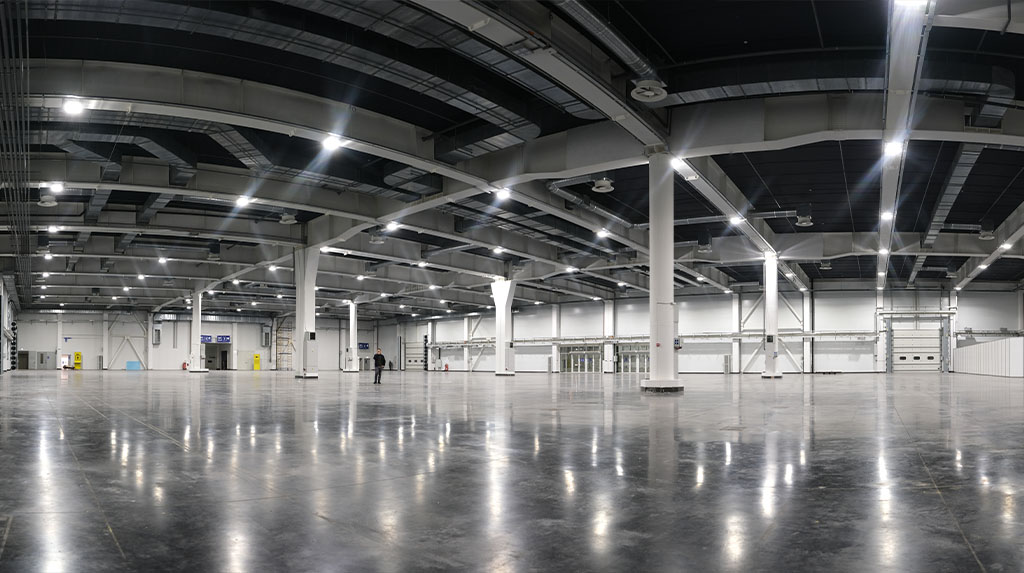
Parameters for Space Classification
The key parameters to consider are: dimensions of the premise and the corresponding illuminance level, the type of luminaires being installed, the utilization and maintenance factors, the reflectance coefficients of walls and ceilings, the maintenance level, and the reference values from the technical specifications of the lighting equipment being installed.
Manufacturers provide detailed technical specifications for their luminaires, which include luminous flux, luminous efficacy, power consumption (which helps measure the energy efficiency of the luminaire), radiant power, and service life.
What Problems Arise Without Doing Lighting Design Calculations?
Without calculation, the industrial lighting operates “blindly,” which will always be more expensive than doing it right from the start.
- Insufficient lighting levels – reduced productivity and increased staff fatigue.
- Excessive energy consumption – installing excess capacity “just in case”.
- Uneven lighting – dark spots or glare that hinder work.
- Glare – impaired vision and risk of injury.
- Non-compliance with standards – issues with audits and workplace safety.
- Incorrect selection of luminaires – rapid wear or inefficient operation.
- Increased operating costs – frequent replacements and maintenance.
- Ignoring the specifics of the space – lighting that is “not fit for purpose” (height, dust, moisture, etc.).
For Which Types of Facilities are Lighting Design Calculations Essential?
Lighting design calculation is a fundamental requirement for any facility where lighting affects safety, efficiency, and compliance with standards. Above all, it is mandatory for industrial facilities (workshops, warehouses, production lines), where the precision of work and working conditions directly depend on the level and quality of lighting.
Lighting design calculation is equally critical for office and commercial spaces where it ensures visual comfort, reduces staff fatigue, and helps comply with health and safety standards. For infrastructure and municipal facilities (streets, roads, parks, transportation hubs), the lighting design layout determines traffic safety and spatial orientation during nighttime hours.
Medical and educational facilities are a separate category where lighting has to meet stricter health requirements regarding uniformity, color rendering, and the absence of glare.
Facilities with increased security requirements (such as the power engineering, including substations, control centers, and critical infrastructure facilities) cannot afford any mistakes: even minor miscalculations can have systemic consequences.
Lighting design calculations are an essential part of the project documentation for new construction, renovation, or lighting upgrades. It is impossible to ensure either compliance with standards or the cost-effectiveness of the solution without it.