


What Is an Energy Audit and Why Should It Be Conducted?
09.07.2026
AuRa: Our Backup Power Solution
22.07.2026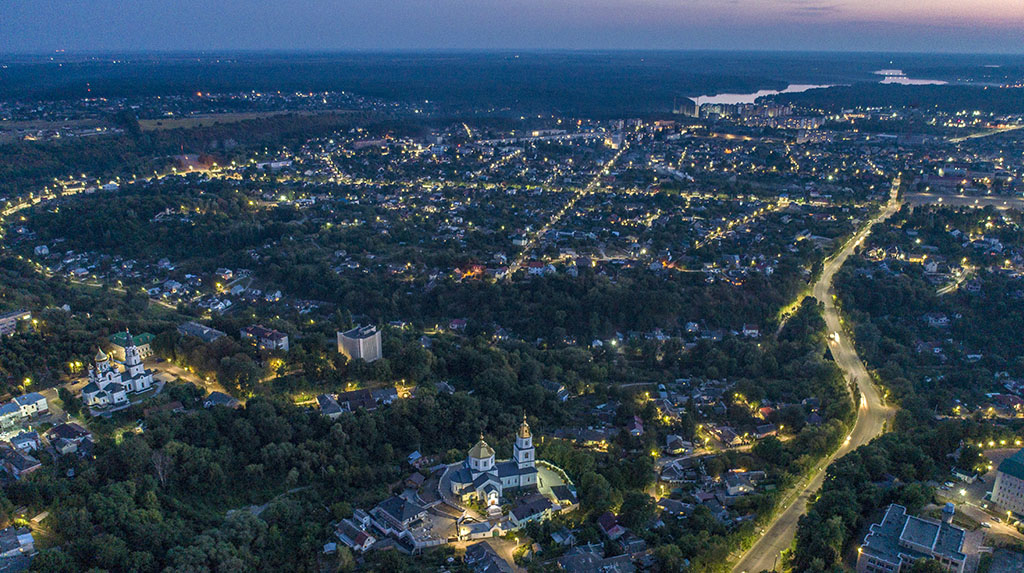
Street lighting brightness control (sometimes called adaptive or «smart» control) is an intelligent system that automatically reduces the brightness of streetlights during off-peak hours. It works through various sensors or pre-programmed timers to dynamically adjust luminous flux, creating a safe environment while significantly reducing electricity consumption and carbon emissions in the community.
What Is Lighting Dimming?
Lighting dimming is the controlled decrease/increase of luminaire’s brightness depending on the time of day, traffic intensity, or other predefined parameters.
Street lighting dimming makes it possible to reduce illumination levels during low-activity hours, lowering electricity consumption and operating costs without reducing system functionality. Brightness control manages light output by reducing the electrical power consumed by the source.
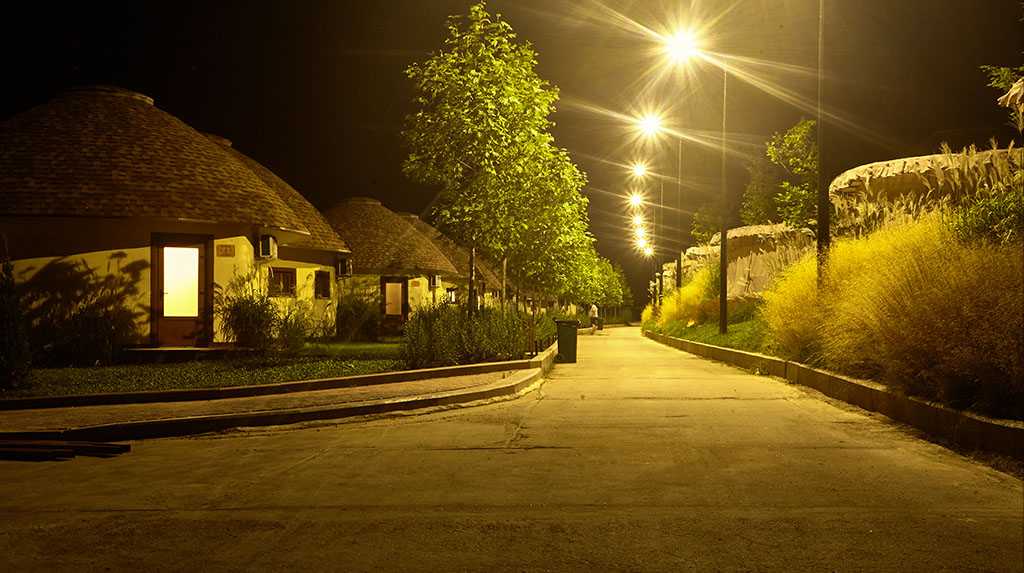
How Light Dimming Works in Street Lighting
The two main methods for modern LED devices are phase-cut dimming (cutting the AC waveform) and pulse-width modulation (PWM) (rapidly switching power on and off to simulate lower light output). Any modernization requires an understanding of these methods in order to select dimmable equipment correctly:
- Phase-cut dimming (mains dimmers). Electrical voltage is regulated by changing the opening angle of thyristors, triacs, thyratrons, or other devices that make up the rectifier or switch. As the opening angle changes, incomplete sine-wave half-cycles are delivered to the load (usually without the leading edge), which reduces the RMS voltage. For LED lamps, the key device is a triac dimmer: it switches off the current at the beginning of the voltage phase and turns it on in the middle of the phase.
- Pulse-width modulation (PWM) is a high-precision digital dimming method typically used for LED strips and luminaires. Instead of lowering voltage, the driver rapidly switches the LED on and off at a frequency usually higher than 360 Hz, making it invisible to the human eye. Brightness is controlled by adjusting the duty cycle – the ratio of «on» time to «off» time. A 50% duty cycle means the light is on for half of the period, resulting in half the total brightness.
- Analog 0-10 V or 1-10 V dimming. Usually used in commercial and architectural lighting. The dimmer sends a low-voltage DC signal (from 0 to 10 volts) to a dedicated LED driver or ballast. A 10 V signal provides maximum brightness, while lowering the signal to 1 V or 0 V brings the light to its lowest dimming state.
Innovative digital systems. Digital protocols such as DALI (Digital Addressable Lighting Interface) are used for centralized control. This is a two-way digital communication system that allows individual or group luminaires to be controlled, providing very smooth and deep dimming. Another example is the DMX512 protocol. It is a high-speed digital protocol used mainly for theater and stage lighting, and it can also handle RGB color changes.
LED Street Lighting: Main Dimming Methods
Smart street lighting optimizes illumination using three main methods:
- Time-based scheduling: pre-programmed LED drivers use the device's on/off time based on sunset/sunrise and the luminaire's geographic location. The system then adjusts lighting brightness late at night (for example, to 30-50% brightness between 00:00 and 04:00), when traffic is minimal.
- Motion-activated brightness control: using built-in radar or passive infrared (PIR) sensors, the lighting remains dim (for example, at 20%). When a vehicle, cyclist, or pedestrian approaches, the luminaires instantly increase brightness to 100%, then dim again once the area is clear.
- Environmental/weather response: systems use photocells and light sensors to adjust power for natural moonlight, fog, or heavy rain, ensuring visibility without wasting energy.
Benefits of Dimming for Cities
Lighting automation and modern LED equipment give communities a rapid reduction in operating budgets:
- Overall Electricity Savings at the Company: adaptive lighting saves 40% to 60% of energy, in addition to the 50% to 70% savings already achieved by switching from legacy sodium lamps to LEDs. Total energy consumption can be reduced by up to 80% when combined with motion and light sensors.
- Maintenance and labor costs: centralized management systems (CMS) monitor individual luminaires in real time.
- Return on investment (ROI): due to lower electricity and maintenance bills, the initial costs of deploying smart dimming infrastructure usually pay back within 1-3 years.
Combining Dimming with Lighting Control Systems
A combined dimming and lighting control system brings together hardware and software to regulate light intensity and manage automated schedules or zones. This includes physical switches, smart sensors, and centralized processors for optimizing energy efficiency, ambience, and automation.
Main Components
- Master/smart dimmers
- Companion/auxiliary switches
- Centralized panels
- Sensors
- Daylight sensors
- Controllers and hubs, etc.
Key Benefits of Dimming
- Energy Efficiency. Combining dimmers with a daylight harvesting system saves electricity and substantially limits consumption.
- Lighting scenes. You can program specific 'scenarios' that simultaneously adjust several dimming zones to preset levels.
- Code compliance. Many modern commercial building codes directly require lighting controls to be combined with automatic dimming and sensors.
Dimming is an important tool for improving the efficiency of street lighting control. It makes it possible to adapt lighting levels to a city's actual needs, reduce electricity consumption and operating costs, and extend the service life of luminaires. Combined with modern control systems, dimming helps communities create a more economical, reliable, and sustainable lighting infrastructure.
Frequently Asked Questions
Can dimming be implemented on already installed LED luminaires?
Yes, if the luminaires and drivers support dimming (for example, 1-10 V, DALI, or control via a remote control system). In many cases, modernization can be carried out without replacing the luminaires themselves.
How much does street lighting dimming save?
Depending on the operating schedule and the level of brightness reduction, dimming can reduce electricity consumption by 20-50%, and sometimes even more.
Does dimming affect the service life of luminaires?
Yes, positively. Operating at reduced power decreases heating of LEDs and electronic components, helping extend the luminaire’s service life and lower maintenance.