


RadiyLED at the Yaremche Forum: How Communities Can Transition to Controlled Savings
02.02.2026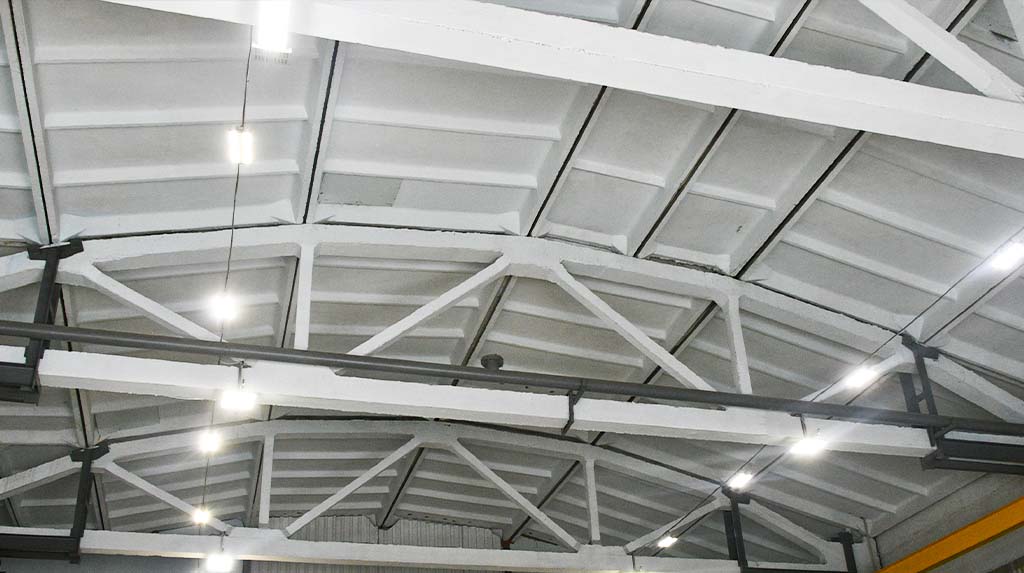
The energy and financial crises force businesses to explore more efficient ways of utilizing resources. The civilized world is transitioning toward resource-efficient green technology development, and the environmental benefits of LED lighting have long been an integral part of sustainable business practices. And nowadays, we have a choice: continue wasting resources by ignoring rational management methods or do everything in our power to save money and resources. First variant inevitably leads to business inefficiency, while the other option leads to practical prosperity.
Why is Eco-Friendly Lighting Important for Business?
Eco-friendliness has evolved from a trend into a mandatory requirement for the success of any business or sole project. It is not only a long-term contribution to the future of coming generations but also a significant economic benefit, a reputational advantage, and a strategic foundation for a company’s long-term growth.
How Does It Work?
Technologies such as energy-saving equipment, eco-friendly LED lighting, and production optimization provide a comprehensive opportunity to:
- Reduce energy and resource consumption;
- Lower disposal and recycling costs;
- Optimize operational processes.
All at the same time, global markets steadily move toward ESG standards. If a company intends to operate in Europe, attract investment, or participate in tenders, it must demonstrate low emissions, resource efficiency, and transparency in environmental processes.
Energy Reduction as a Major Environmental Factor
The implementation of industrial LED lighting has clearly demonstrated its primary advantage: a smaller carbon footprint. By using less energy, the widespread adoption of LEDs can lead to a significant reduction in carbon emissions.
Energy-efficient LED lighting stems from its ability to convert electrical energy into light with minimal heat loss in comparison to incandescent lamps. This allows LEDs to consume significantly less energy – often 75-90% less – and last up to 25 times longer, and that results in substantial savings on electricity bills and reduced maintenance needs. LED lighting offers high efficiency (lumen per watt), durability across various temperature ranges, and instant full brightness.
Minimal Heat Generation: Traditional incandescent lamps generate light by heating a filament, wasting significant energy as heat. In contrast, LEDs emit light directly from a small semiconductor device, converting almost all electricity into light rather than heat.
Longevity and Reduction in Emissions of LED Lighting
The lifespan of LEDs exceeds general indicators of traditional lamps, such as High-Pressure Sodium type lamps, by 15-20 times. An extended service life means fewer replacements, saving money on new lamps and reducing waste. LED luminaries can last for years, reducing the frequency of replacements and the associated labor and disposal costs.
Recycling
LED luminaries should ideally be taken to specialized electronic waste collection points. This is important because they contain plastic and metal that can be recycled. Although, LED luminaries do not contain mercury and are considered relatively safe, they should not be thrown into regular trash because they decompose very slowly and can harm the environment.
Where to Recycle LED Luminaries
- Electronic Waste Collection Points: The best option is to hand over luminaries to specialized collection stations.
- Specialized Containers: Some cities provide containers specifically for used luminaries.
- Retailers and Manufacturers: Some retailers and manufacturers accept old luminaries for further recycling.
Why Is It Necessary to Recycle LED Luminaries Correctly?
- Material Recycling: Plastic and metal parts of LED luminaries can be reused, reducing landfill waste.
- Environmental Protection: Despite low toxicity, luminaries’ components can take decades to decompose, potentially contaminating soil and water.
If Recycling is Not Available
Safe Packaging: If recycling is unavailable, wrap the luminaire securely in a box or thick bag before disposing of it in household waste to prevent potential injury from fragments.
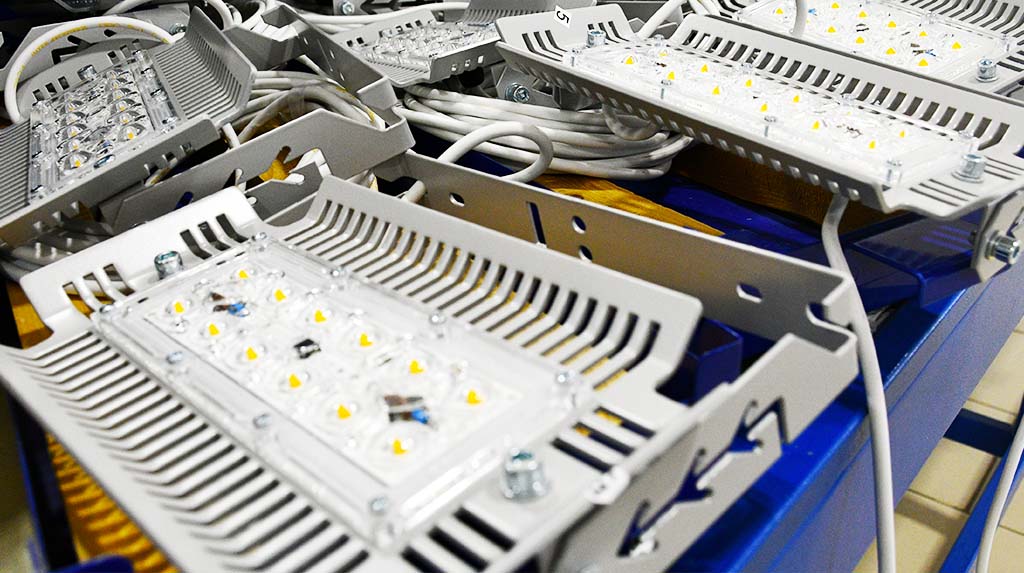
Safety and Absence of Toxic Materials
Several myths exist regarding LED luminaries that are simply untrue and can easily be dispelled:
- LED luminaries harm vision and emit UV rays:
This is a misconception. LED luminaries do not emit dangerous UV radiation. Manufacturers tune the blue spectrum to be safe for the eyes and avoid disrupting circadian rhythms. - LED luminaries contain toxic substances:
Unlike fluorescent lamps, which contain mercury, modern LED luminaries do not contain hazardous chemical elements. - 3. LED luminaries cause fatigue and headaches:
Modern models equipped with high-quality drivers do not flicker, preventing discomfort during use.
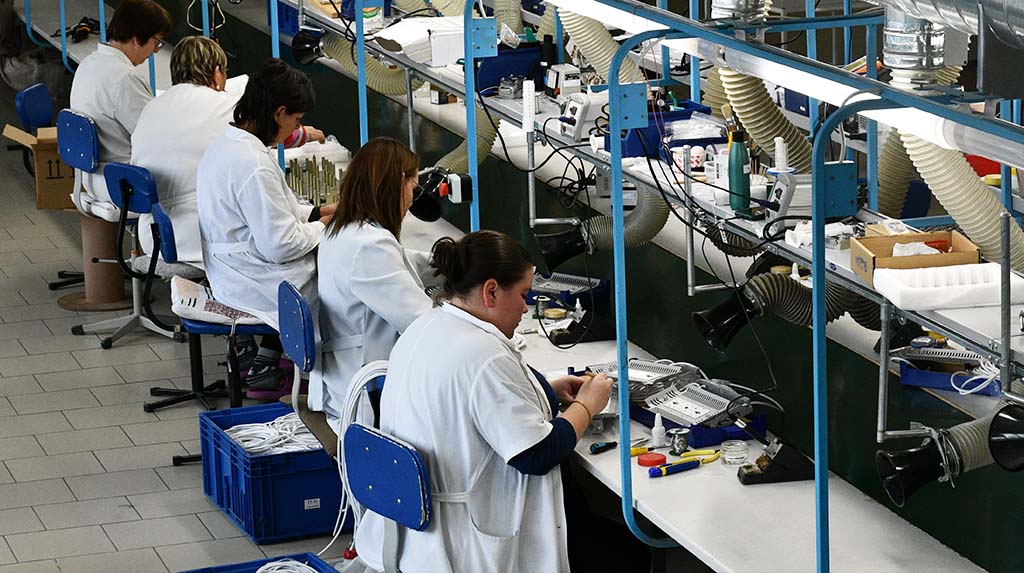
Reduction of СО2 Emissions and Environmental Impact
LED luminaries do not harm the environment. In fact, used luminaries are recyclable. They should not be thrown away with household waste but must be taken to specialized collection points for proper disposal.
Environmental Sustainability
LED luminaries are non-toxic and do not contain chemicals. When a fluorescent lamp (also energy-saving) breaks, it releases mercury vapor contained within it. At the same time, LED luminaries, even if damaged, are absolutely safe for humans and the environment. Moreover, LED luminaries are made of 100% recyclable materials.
Additionally, LED luminaries are capable of operating from low-voltage power sources, such as solar panels.
How Does LED Lighting Help Companies Meet ESG Requirements?
LED lighting for enterprises is the simplest and, at the same time, the most effective way to help a company meet modern ESG requirements. Here is how it affects each of the ESG components – Environmental, Social, Governance – in a clear and practical notion:
E – Environmental
- Reduction of energy consumption
- Waste reduction
- Absence of toxic materials
S – Social
- Increasing safety and comfort for employees
- Supporting personnel well-being
G – Governance
- Compliance with ESG reporting and energy efficiency standards (GRI, SASB, TCFD, EU Taxonomy).
- Reduction of operating costs and budget optimization.
- Support for sustainable development strategies.
Important!
LED lighting is the most “visible” and rapid ESG action, as such technologies save energy, reduce negative environmental impact, improve working conditions, strengthen corporate reputation, and help meet international sustainability standards.
RadiyLED experts will design and develop a technical solution for the LED lighting of your facility for free. Send us your inquiry with an “Efficient lighting calculation” remark.